



coconut water
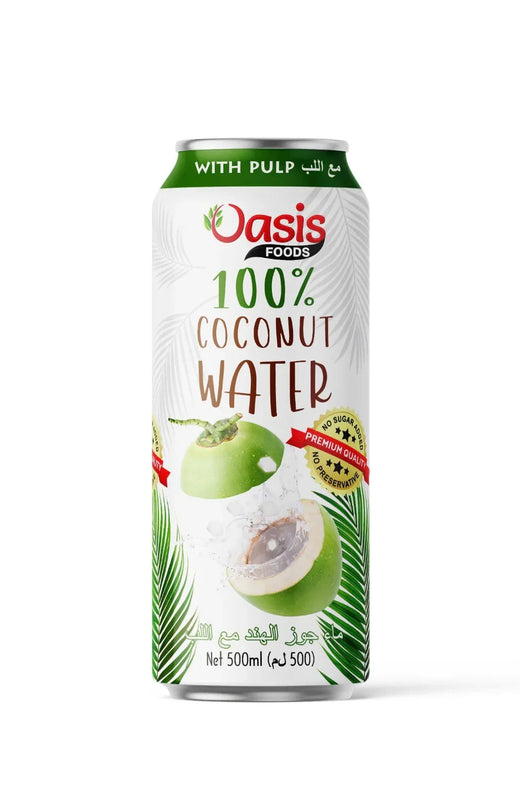
Coconut Water with Pulp: What Is Really Inside the Can
Pick up a can of coconut water with pulp and you are holding one of the simplest drinks on any shelf in the UAE. There are two ingredients. That is the whole list. What makes it worth writing about is not the ingredient list though, it is how often this drink gets described in ways the numbers do not support.
This is the honest version. We hold the certificate of analysis for the cans we sell, so instead of repeating the usual claims we can show you the actual figures and say plainly what they do and do not mean. If you already know which size you want, the 330ml can and the 500ml can each have their own page.

What is actually in the can
Coconut water is the clear liquid that sits inside a young green coconut. It is not pressed from the white flesh, and it is not coconut milk, which is a different product made by grinding mature flesh with water. Coconut water is simply what the fruit already holds.
These cans contain coconut water at 95 percent and coconut pulp at 5 percent. Nothing else goes in. No added sugar, no preservative, no colour, no flavouring. When a label lists two ingredients and both of them are the fruit, there is very little room for anything to hide.
The pulp, and what it is not
The pulp is small pieces of tender coconut flesh suspended in the liquid. It is why this version tastes fuller than filtered coconut water, and why a can wants a gentle shake before you open it. Left alone, the pieces settle.
Here is the part most product pages skip. The pulp changes the texture and rounds out the flavour, but on this product the panel records dietary fibre at zero grams. If you are drinking it for fibre, this is not the drink for that. Enjoy the pulp for what it genuinely gives you, which is mouthfeel and a more complete coconut taste.
No added sugar, said accurately
The panel shows added sugars at zero grams. Every gram of sweetness in the can came out of the coconut. That is a real difference from most cans in the chiller and it is worth knowing.
It is not the same as saying the drink contains no sugar. Coconut water naturally holds sugars, and on this product that works out at 5.8 grams for every 100ml. A 330ml can holds 19 grams. A 500ml can holds 29 grams. Nobody added any of it, and all of it still counts if you are keeping track of what you drink across a day. The World Health Organization guidance on sugars is linked at the end if you want to read the reasoning behind daily limits.
The numbers, straight from the certificate
| Nutrient | Per 100ml | 330ml can | 500ml can |
|---|---|---|---|
| Energy | 24 kcal | 79 kcal | 120 kcal |
| Total sugars | 5.8 g | 19 g | 29 g |
| Added sugars | 0 g | 0 g | 0 g |
| Potassium | 90 mg | 297 mg | 450 mg |
| Sodium | 30 mg | 99 mg | 150 mg |
| Total fat | 0 g | 0 g | 0 g |
| Protein | 0 g | 0 g | 0 g |
| Dietary fibre | 0 g | 0 g | 0 g |
Two more figures from the same document. Acidity sits at pH 4.8 and the sugar reading is 6.0 Brix, which is why the drink tastes lightly sweet and a little tart rather than syrupy.
What the hydration research actually shows
Coconut water has a reputation as a natural sports drink. The research is more interesting than the reputation, and more useful to you.
Studies comparing drinks rich in potassium against plain water and against conventional sports drinks have found coconut water to be a perfectly reasonable rehydration drink. What they have not found is a clear advantage from the extra potassium by itself. In a randomized crossover trial published in 2026, drinks carrying both sodium and potassium did better than water alone on fluid balance after exercise in the heat. The useful conclusion is that sodium does a lot of the work.
Now look back at the table. This drink carries 90 mg of potassium and 30 mg of sodium per 100ml. The potassium is genuine but modest. A 500ml can gives roughly 450 mg, which is in the region of a banana. The sodium is lower than you will find in most drinks sold specifically for sport.
So the fair description is this. For everyday drinking, for a warm afternoon, a walk, a gym session of ordinary length, or simply because you would rather have it than a soft drink, it hydrates and it tastes good. For heavy and sustained sweating, the kind that comes with working outdoors through a UAE summer or training hard for a couple of hours, you also want salt from your food or a drink built for that job. Coconut water is a pleasant part of the picture rather than the whole answer.
Who should read the panel closely
Two groups genuinely need the numbers rather than the marketing.
If you have been told to limit potassium, which is common advice for people with reduced kidney function, coconut water is a drink to raise with your doctor rather than assume is harmless because it is natural. And if you are counting sugars, the 19 grams in a 330ml can and the 29 grams in a 500ml can belong in that count, even though none of it was added.
For most people neither applies. They are worth stating because a drink this simple still deserves an honest description.

Which size makes sense
The liquid is identical in both cans. All that changes is how much you get and where it fits in your day.
The 330ml can is the everyday size. It fits a lunch box, a desk drawer and the bin in a car door, and at 79 kcal it is an easy swap for a soft drink. The 500ml can is for when 330 runs out too quickly, which usually means after training, on a long drive, or when you want one can to last an afternoon rather than five minutes.
There is a full page on each. The 330ml can covers where the smaller size earns its place, and the 500ml can covers the larger serve and buying by the carton.
Keeping it and serving it
The cans are aluminium and the stated shelf life is 24 months, kept dry, cool and out of direct sunlight. That last part matters in this climate. A carton left in a hot store room or a car boot will not keep the way a carton in a cool cupboard does.
Serve it properly cold. Coconut water at room temperature tastes flat and faintly cooked, and the same can straight from the fridge tastes clean and sweet. Shake it gently first so the pulp spreads through the liquid instead of sitting at the bottom. Once it is open, treat it like any fresh drink and finish it the same day.
It works as an ingredient too. Blend it with mango or pineapple for a lighter smoothie, freeze it into cubes that will not water down a juice, or pour it over ice with a squeeze of lime and a few mint leaves.
Buying it in the UAE
Single cans suit a fridge at home. Cartons suit offices, gyms, cafes, villas with teenagers, and anyone who has worked out that running out is the real problem. A carton holds 24 cans, packed as six cans to a block and four blocks to a box.
You can browse the single cans or the cartons. The individual products are the 330ml can, the 500ml can, the 330ml carton and the 500ml carton.
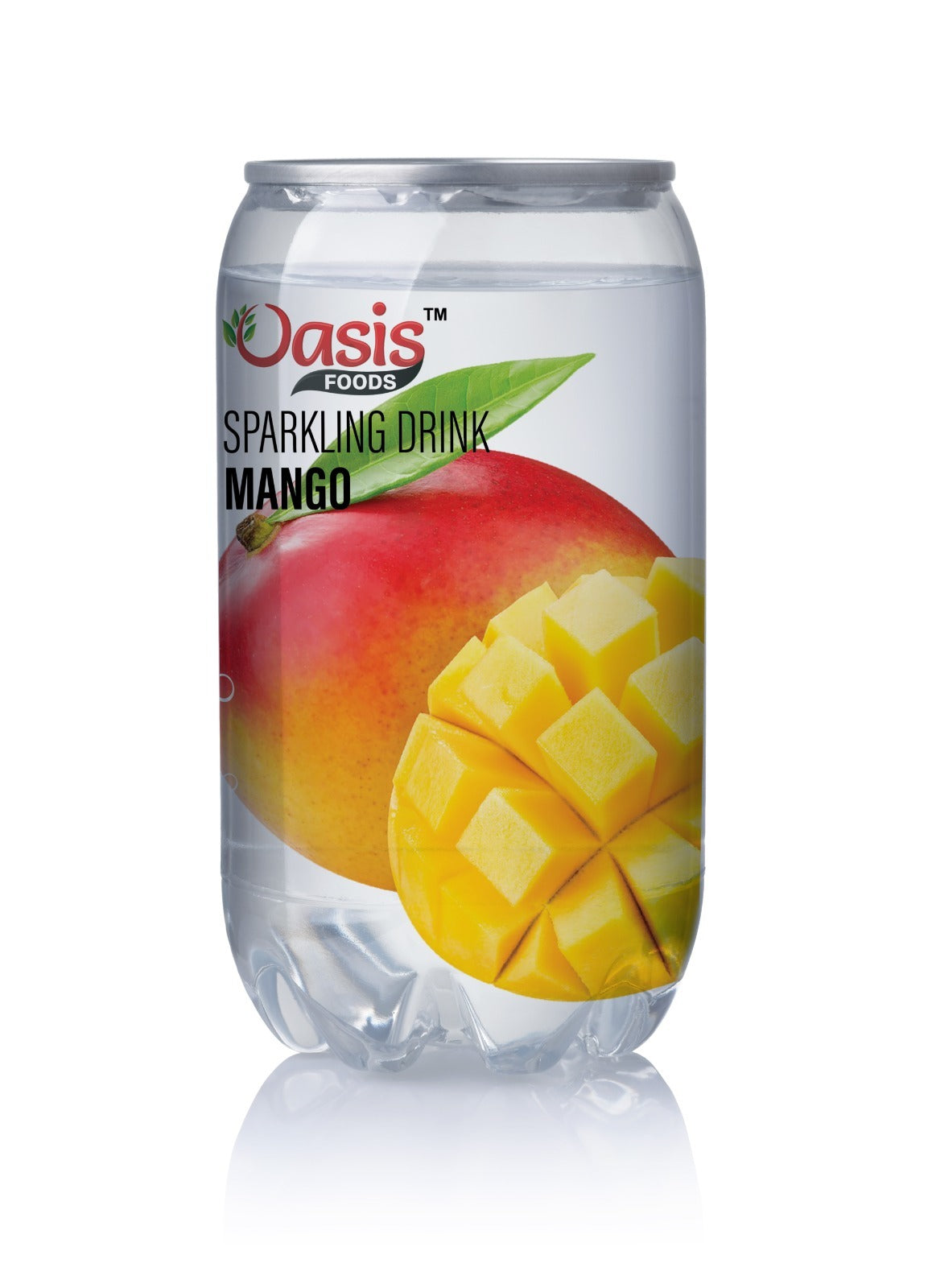
If you are filling a fridge for other people as well as yourself, the Oasis sparkling range sits alongside it for anyone who wants something fizzy instead.
How we sell it and how it reaches you
The product is halal and is produced in a HACCP certified facility. A certificate of analysis is available on request, and the one we work from covers appearance, taste, microbiology, heavy metals, acidity and the full nutrition panel. Delivery across the UAE is free on orders above AED 300, and you can pay online or by bank transfer.
Where these numbers come from
Everything above about the can is taken from the certificate of analysis for this product, dated 20 September 2025, which we can send you on request. The hydration research is listed below so you can read it yourself rather than take our word for it.
- Pérez-Idárraga and colleagues, Applied Physiology, Nutrition, and Metabolism, 2014. Read the study on PubMed
- Killick and colleagues, International Journal of Sport Nutrition and Exercise Metabolism, 2026. Read the study on PubMed
- United States Department of Agriculture, FoodData Central, for typical coconut water composition. Search the database
- World Health Organization guideline on sugars intake for adults and children, 2015. Read the guideline
We have written the references as author, journal and year rather than quoting each full title, because the published titles contain hyphens and this article is written without them.
 Shop the collection
Oasis Coconut Water with Pulp, CansEverything named in this article, in one place.
View
Shop the collection
Oasis Coconut Water with Pulp, CansEverything named in this article, in one place.
View
Related reading
Comments
Checked before publishing.
No comments yet — yours would be the first.
On this page
- What is actually in the can
- The pulp, and what it is not
- No added sugar, said accurately
- The numbers, straight from the certificate
- What the hydration research actually shows
- Who should read the panel closely
- Which size makes sense
- Keeping it and serving it
- Buying it in the UAE
- How we sell it and how it reaches you
- Where these numbers come from